The treasure consists of six gold rings, one gold pendant, and one silver ring. The artifacts were found in 1929 by the Sea Sámi Erik Johnsen, when he was digging a potato field near his home in Laksefjorden in Finnmark. Some of the jewelry is almost 1500 years old and was likely buried during the Viking Age. Now, the artifacts will become part of the museum's collections in Tromsø and contribute to new research and dissemination of Northern Norway's rich history.
– We are very pleased that the Laksefjord Treasure is now back in Northern Norway, where it belongs. This is an important step to strengthen the understanding of our regional history, says Jørn Henriksen, archaeologist at the Arctic University Museum of Norway.
The find is unique, both regionally and nationally, with a total metal weight of nearly 410 grams of gold and 118.86 grams of silver.
The artifacts date to different periods, from the 6th century to the 10th–13th centuries. The rare gold pendant has no known parallels, making it particularly difficult to date.
The composition of the treasure suggests that most of the artifacts were already old when they were buried, likely during the Viking Age.
Despite the significance of the find, the treasure was sold in 1930 for 10 kroner and a crate of herring to skipper Lars Ask, who later resold it to Aalesunds Museum for 1050 kroner.
At this time, it was already legally established that archaeological finds without a known owner belong to the state and are to be managed by regional responsibility museums. Nevertheless, the treasure remained in Aalesunds Museum's collections, and several attempts by the Arctic University Museum of Norway to have it returned had previously been unsuccessful.
In 2008, a museum-professional assessment commissioned by the Directorate for Cultural Heritage determined that Aalesunds Museum had the management responsibility for the treasure on behalf of the state. However, after extensive reorganizations within the museum, which now focuses on Ålesund's urban history, it was decided to return archaeological artifacts to their respective responsibility museums.
In 2025, the process of transferring the collections began, which will primarily be incorporated into the collection of the University Museum of Bergen.
The Laksefjord Treasure and a ring brooch from Hjemgam in Fauske municipality fall within the geographical area of responsibility of the Arctic University Museum of Norway.
Following an agreement between Aalesunds Museum, the University Museum of Bergen, and the Arctic University Museum of Norway, a carefully planned transfer was arranged.
The Laksefjord Treasure will now become part of the museum's collections and be actively used in research and dissemination of Northern Norway's ancient history.
After 97 years, the treasure is finally back where it belongs, and it will help shed new light on the region's rich cultural heritage.
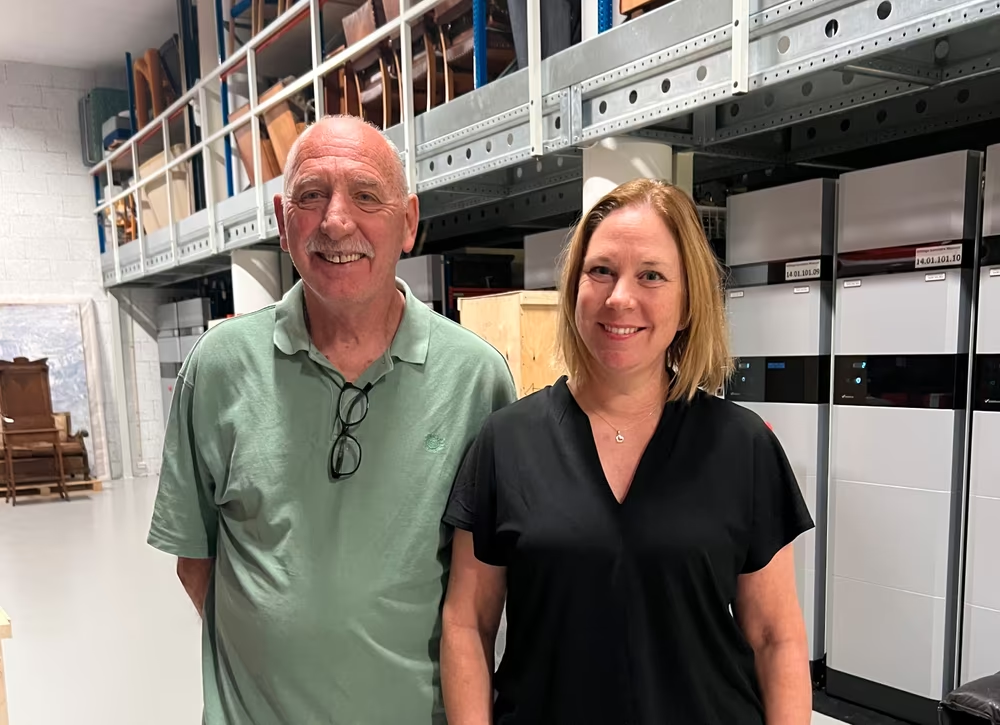
The people in the photo are: Jørn Erik Henriksen, Archaeologist at the Arctic University Museum of Norway, University of Tromsø; Inger Christine Årstad, Museum Director at Aalesunds Museum; Professor Ingrid Sommerseth, Head of Department at the University Museum in Tromsø; and Kari Loe Hjelle (originally from Ålesund), Director of the University Museum of Bergen. Photo: Adnan Icagic © University Museum of Bergen